
이석기 의원은 2013년 5월12일 ‘RO’ 비밀회합에서 ‘필승의 신념’으로 무장할 것과 북한의 전쟁 상황 조성시 이에 호응하기 위한 ‘물질적, 기술적’ 준비 체계 구축을 주문했다. <국회의원(이석기) 체포동의 요청서>에 언급되어 있는 ‘RO’의 전시 대비 계획은 아래와 같다.
<동(同) 회합에 참석한 ‘RO’ 조직원들은 약 1시간에 걸친 권역별 토론을 통해 現 정세가 ‘전쟁 상황’이라는 것에 대한 인식을 공유하고 전시(戰時)에 대비한 ‘물질적-기술적’ 실행방안을 통모-합의하였으며, 그 중 공동피의자 이상호, 한동근이 소속되어 있는 ‘RO’ 경기남부지역 조직원들은 물질적-기술적 준비사항으로 ▲철도-통신 등 국가기간 산업에 대한 타격 ▲주요 보안시설 위치 사전 파악 ▲인터넷을 통한 무기제조법 습득 등 자체 무장 준비 ▲전쟁 대비 매뉴얼 작성 등 실질적으로 실행 가능한 방법을 통모-합의하였다…(중략) 국지전 등 북한의 전쟁 상황 조성시 이에 호응하여 대한민국 내부에서 정부를 전복하고 사회주의 국가를 건설하기 위해 내란 수준의 유격투쟁을 전개할 것을 구체적으로 합의하였다>
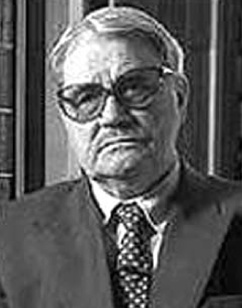
바실리 미트로킨(前 KGB 요원)
‘중앙일보’ 보도에 따르면 공안당국은 현재 ‘RO’와 ‘미트로킨 파일’에 폭로되어 있는 구(舊)소련 첩보기관 KGB의 유사시 미국(美國) 기간시설 파괴 공작과의 유사성을 검토하고 있는 것으로 알려져 있다. ‘미트로킨 파일’은 KGB 극비 문서 보관실에서 근무하던 바실리 미트로킨(Vasili Mitrokhin)이 10여 년간 KGB 비밀문서를 필사하거나 복사해 보관한 자료다.
미트로킨은 1992년 영국으로 망명하면서 이 자료를 갖고 나왔다. 2005년 영국에서 출간된《미트로킨 파일 II: KGB와 세계》에 관련 내용이 상세히 기술되어 있다.
미트로킨 파일에 따르면 KGB에 ‘Targeting America’라는 코드명으로 “국가 기간 시설을 파괴하라”는 전술지침이 있었다. KGB에는 석유 공급 시설을 파괴하는 ‘타깃명 CEDAR’, 물류 시설을 붕괴시키는 ‘타깃명 GIANT’라는 테러 전술이 있었다. 미국·캐나다 접경 지역의 석유수송관을 파괴하고 뉴욕항 등 물류 시설을 파괴해 미국에 경제적인 타격을 입힌다는 내용이다.
목표대상에 대한 사진과 지도는 물론 평시와 전시 기본용도와 취약점, 파괴를 위한 기술적 설명이 첨부되어 있다. 공안당국 관계자는 최근 ‘중앙일보’와의 인터뷰에서 “‘RO’ 조직원들의 논의 내용은 북한에 사상적·이론적 영향이 컸던 옛 소련 KGB의 테러 전술과 매우 비슷하다는 점에서 유사시 대한민국 체제를 전복하기 위한 모의 성격이 짙다”고 밝혔다.
정리/조갑제닷컴 김필재 spooner1@hanmail.net /2013년 9월12일
[원문자료] Red Terror
Stolen Soviet documents reveal the KGB's secret plan to destroy our national infrastructure.
BY JIM WILSON
It seems too much like a Cold War spy novel to be real. Vasili Mitrokhin, a minor cog in the vast apparatus of the Soviet secret police, begins reading the sensitive field reports his KGB spymasters have ordered him to file. Startled by accounts of atrocities in Afghanistan and a secret crackdown on dissidents, he crosses the line between patriot and traitor. By day Mitrokhin hand-copies sensitive documents that pass through the KGB's foreign intelligence archive. At night he smuggles them past guards and hides them in the mattress in his Moscow apartment. Years pass as he patiently waits for his opportunity to flee. That moment arrives in the chaos following the collapse of the Berlin Wall. Taking advantage of to flee. That moment arrives in the chaos following the collapse of the Berlin Wall. Taking advantage of crumbling border security, Mitrokhin makes his way to the breakaway Baltic states. Clutching his KGB pension book as proof of his identity and a sample of his wares, he walks into a British embassy and asks to make a deal. In exchange for a new identity and British citizenship, he will turn over thousands of pages of the Soviet Union's most closely guarded secrets.
'It is the largest haul of classified KGB records ever obtained by the West,' says U.S. Rep. Curt Weldon of Pennsylvania. The chairman of the House Military Research Subcommittee, Weldon called congressional hearings on KGB activities in the United States when the content of the Mitrokhin archives first became public last fall. As intelligence analysts began to digest the files they discovered a secret more shocking than the accounts of the KGB death squads that motivated Mitrokhin to defect. In reprisal for the failed Bay of Pigs invasion of Cuba in 1961, Nikita Khrushchev had ordered the KGB to place America in the crosshairs of a sabotage campaign. Over the next 20 years, KGB agents would take advantage of the thousands of miles of unguarded Canadian and Mexican borders to bury caches of high explosives throughout the United States. On Moscow's command, agents could use them to blow up ports, dams, power stations and pipelines.
'It all rings very true,' Col. Oleg Gordievsky, the former chief of the KGB's station in London who defected to the West in the mid-1980s, told congressmen participating in Weldon's hearings. 'I personally participated in digging ground in [Stockholm] and putting radio equipment into the ground.'
In The Crosshairs
Christopher Andrew, a historian who specializes in Soviet intelligence and who collaborated with Mitrokhin to produce The Sword And The Shield, a history of the KGB, expands upon the extent of the operation. 'Among the chief sabotage targets across the U.S. border were military bases, missile sites, radar installations and the oil pipeline which ran from El Paso, Texas, to Costa Mesa, Calif.,' he says.
The KGB also had plans to put America in the dark. Operating from a safe house in Big Spring Park, near Harrisburg, the capital of Pennsylvania, KGB terrorists planned to attack powerline interconnection points serving the Northeast. Montana was the focus of what Andrew believes would have been a two-stage attack against Flathead and Hungry Horse dams. '[The documents] identified a point, code-named Doris, on the South Fork River about 3 kilometers below the dam where [they] could bring down a series of pylons on a steep mountain slope that would take a lengthy period to repair,' says Andrew. 'The KGB also planned a probably simultaneous operation in which commandos would descend on the Hungry Horse Dam at night, take control of it for a few hours and sabotage its sluices. In 1967, a number of frontier crossings were reconnoitered, among them areas near the Lake of the Woods and the International Falls in Minnesota, and in the regions of the Glacier National Park in Montana.'
To ensure that oil and hydroelectric power could not be routed from Canada, the KGB planned a simultaneous attack on 'target Kedar,' the code name for oil pipelines between British Columbia and Montreal. The documents that Mitrokhin copied reveal that attempts at breaching America's borders were organized from the Soviet Union's Ottawa embassy. They began as early as 1959 and continued as late as 1972. 'Each target was photographed from several angles and its vulnerable point identified,' says Andrew. 'The most suitable approach roads for sabotage operations, together with the best getaway routes, were carefully plotted on small-scale maps.'
The purpose of the attacks on powerlines and pipelines was not simply to make Americans shiver in the dark. The blackout in the East and Midwest and massive pipeline fires in Texas and California would be followed by a strike against the world's most visible symbol of capitalism, the New York City skyline, which the KGB identified as 'Target Granit.' Under cover of darkness, agents who had infiltrated the United States, most likely from Canada, would recover high explosives and attack the network of piers and warehouses that line the Port of New York.
Laughable though it may now seem, the Soviet leadership expected the average American to react to power blackouts, energy disruptions and news of an assault on New York by overthrowing the federal government.
Unaccounted Caches
'On present evidence, it is impossible to estimate the total number of KGB arms and radio caches in the United States,' Andrew told Weldon's committee. 'It's possible that some of the caches selected near U.S. targets may never have been filled. Others may have been emptied.' The KGB records do, however, identify seven caches in this country. Three are mentioned as being buried in Southern California. Two, identified by Andrew as Aquarium 1 and Aquarium 2, are in Minnesota. Two more, Park and Kamy, are in northwestern Montana.
The uncertainty about the locations of all of the explosives stems from how the records themselves were stolen. In June 1972 the KGB's Foreign Intelligence Directorate moved from its offices in the Lubyanka in Moscow to a new building in Yasenevo, southeast of the city. 'All batches of files had to be signed out at one place, and they had to be signed in at another place,' says Andrew. 'And Mitrokhin was the man who had to sign them out from the old headquarters, the Lubyanka, and sign them in at the new headquarters. Only the most senior officers shared [Mitrokhin's] unrestricted access. And none had the time to read more than a fraction of the material.'
The job took 10 years. Mitrokhin did his most important work on Wednesdays, when he worked on the Directorate S files in the Lubyanka. 'For a few weeks he tried to commit names, code names and key facts from the files to memory and transcribe them each evening when he returned home,' says Andrew. When this proved too slow, he began taking notes, which he discarded in a wastebasket. Then, just before leaving to go home he would retrieve the notes and tuck them in his shoe. His confidence grew. 'After a few months he started taking notes on ordinary sheets of office papers, which he took out of his office in his jacket and trouser pockets. Not once in the years Mitrokhin spent noting the archives was he stopped and searched,' says Andrew.
While the locations of the caches buried across the United States may not be known with precision, their contents are. During his testimony before Weldon's committee last fall, Andrew entered into the hearing record a detailed inventory of a typical cache. It included explosives for blowing up railway track, and specialized explosives designed to destroy the main supports of high-voltage power transmission towers. Detonators were timed for a 2-hour delay. Target files in the archives included photos and maps, as well as an explanation of the target's function in peacetime and use in wartime. Vulnerable points were identified along with a description of the technical expertise needed to exploit them. A schedule recommended the best time of day to strike.
While none of the U.S. caches have been found, intelligence experts are convinced they exist because similar supplies have been found in Europe and Canada. The sabotage attacks in the United States were part of a larger effort to target Western nations. Investigations of a Toronto location yielded about 400 pounds of dynamite. Three caches turned up in Belgium. Archive documents warned that a cache near Bern, Switzerland, was booby-trapped. When police hit it with a water cannon, an antitampering device set off an explosion. Its code name, '3,' prompted police to issue a warning against moving any other suspicious buried containers.
Mission Canceled
The order to begin the sabotage program was never issued. Andrew believes that when Yuri Andropov came to power he was unwilling to accept the many and complicated political risks of having KGB agents discovered as the perpetrators of attacks. Andropov directed that the KGB instead recruit disgruntled groups within the United States and Canada. And in time even this modified plan would be abandoned. '[Leonid] Brezhnev died, Andropov died,
all the leaders were very, very old-fashioned, and easily influenced by Communist dogmas,' said Gordievsky, the former KGB London station chief, at the congressional hearings. '[Mikhail] Gorbachev wanted to change, he wanted reforms. So they started to work out a new political thinking, which was a new concept of the Soviet foreign policy.' The plan and the explosive archives were simply forgotten.
The FBI has told Weldon it is conducting an ongoing investigation to locate KGB arms caches in the United States. Mitrokhin, now 78, lives in Britain under an assumed name. And so another dangerous chapter of Cold War history comes to a close.
Or does it?
The Soviet Union had two intelligence services. The well-known KGB had a shadowy military counterpart, the GRU. It is so secret, former agents say, that any Soviet citizen who inquired about joining was arrested as a potential spy. The punishment for defectors was said to be cremation while still alive. 'Everything that belongs to the area of sabotage, caches, radio communication, weapons, explosives and so on, is mainly the domain of the GRU,' said Gordievsky. 'The Mitrokhin archive is a small part. We still don't know the most important thing, what is actually happening on the military side.'